Four Marketplace Listings Went Dark And Nobody Knew Why
Confidentiality Note: Client anonymized. Marketplace, carrier and warehouse systems are described by role. Revenue, margin and vendor pricing are left out. This work was done in an operating role inside the client's group of companies rather than under a separate vendor agreement.
The Full Story
Four listings were dark. That was the whole brief. Nobody could say when they had gone dark, or why, and the marketplace's own interface did not volunteer an answer.
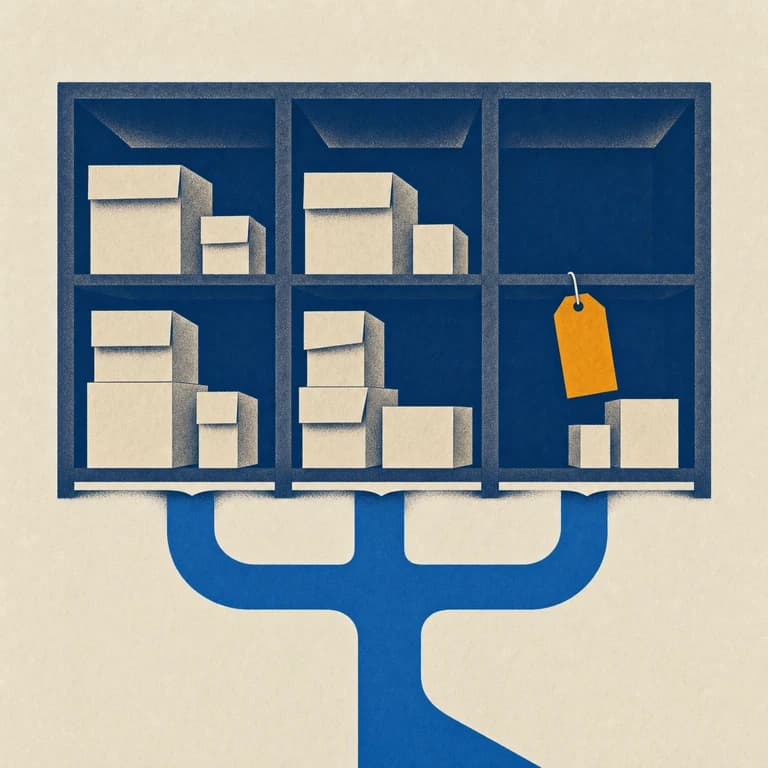
Three of them turned out to share a cause: a scheduled end date on the offer had passed in late July, and an offer without a live price is not a listing a customer can buy from. It is a page. Meanwhile 806 units were in transit to those exact listings, which is the kind of fact that reframes a task. This was not a content problem. It was inventory moving toward a door that had quietly locked.
There was worse underneath. A sync tool had been creating listings automatically and had created some for the wrong products, so apparel was appearing under the brand's product codes. The seller account ran through one person's personal login with an unidentified contributor still on it. And there were no notification subscriptions at all, which is to say the early warning system everyone had assumed was running did not exist. Nothing was ever going to raise its hand.
So the first move was to stop reading the business through a third party tool. We registered a developer account with the marketplace directly, got it approved, and made the first automated pull. Then we took a full read-only inventory of the actual state: every listing's content and configuration, all fourteen fulfilment codes, inbound shipments, marketplace scope, pricing and thirty day demand.
The controls matter more than the inventory does. Four discriminating controls ran alongside the reads, and we added an operation level control to every call, because the failure mode we were most afraid of is the one where a partial answer looks like a healthy answer. A read that returns nine of fourteen products and does not say so is worse than a read that fails outright.
It earned its keep almost immediately, and in the direction nobody wants. We had a restock queued up, sized and waiting on a click. A live read showed a shipment of 640 units already in transit to the fulfilment centre, carrying roughly 103 days of cover, which made the correct size of the new send zero. We had been about to order stock the business did not need, and the measurement caught us rather than the other way round.
The same discipline later found 3,198 units of inbound that had labels created and had simply never been collected, sitting at the origin facility for twelve to fifteen days.
Pricing got the same treatment: staged, dry run, then applied across ten marketplace offers and fourteen store rows, and verified by a live read afterward rather than assumed from the write.
It all runs in their accounts, on their developer registration. The work is not finished and the board says so. What changed is that the marketplace is now a system they can read, rather than a place where things occasionally go dark.
The Challenge
A sync tool had automatically created marketplace listings for the wrong products, so apparel appeared under the brand's own product codes. Four listings were dark and nobody could say why. The seller account ran through one person's personal login with an unidentified contributor still attached. There were no notification subscriptions of any kind, so the early warning signal everyone assumed existed was simply not wired. And pricing had drifted between the store and the marketplace with no single sheet saying which was right.
Our Solution
A direct integration with the marketplace's own selling API, registered in the client's developer account, replacing the third party tool as the read path. Then a full read-only state inventory: every listing's content and configuration, every fulfilment code, inbound shipments, marketplace scope, pricing and thirty day demand, with four discriminating controls, plus an operation level control on every read so a partial answer can no longer pass as a healthy one. On top of that, a per product delta matrix across the marketplace, the store and the warehouse, with a ranked punch list and an owner on every line.
The Result
Dark Listings Found, Explained And Reopened